Location
Thane & Mulund
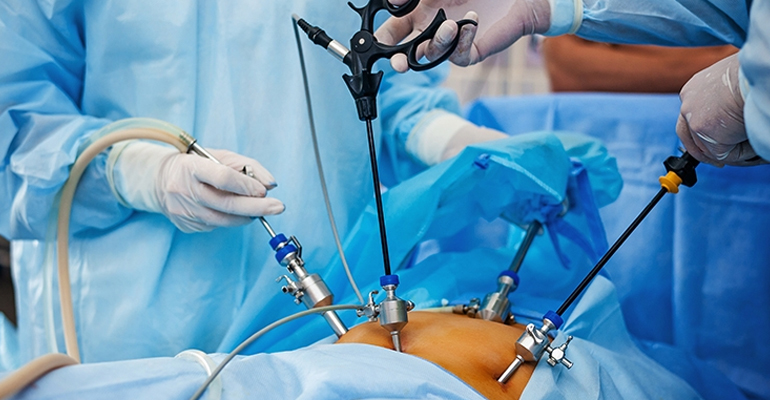
Minimally Invasive Surgery, also known as laparoscopic or keyhole surgery, has revolutionized the way many surgical procedures are performed. It involves making small incisions and using specialized instruments and a camera (laparoscope) to perform surgery inside the body. This approach offers several advantages over traditional open surgery, including smaller incisions, less pain, shorter hospital stays, and faster recovery. Here's how minimally invasive surgery is used for various conditions:
Hernia Repair:
- Laparoscopic hernia repair is a common approach for inguinal, umbilical, and ventral hernias.
- Small incisions are made, and a mesh is often used to reinforce the weakened area.
- This technique reduces postoperative pain and provides a quicker recovery compared to open hernia repair.
Gallbladder Surgery (Cholecystectomy):
- Laparoscopic cholecystectomy is the standard procedure for removing the gallbladder.
- Small incisions are made to access the gallbladder, which is then removed.
- Patients typically experience less pain and a shorter recovery period.
Appendix Removal (Appendectomy):
- Laparoscopic appendectomy is used to remove an inflamed or infected appendix.
- Small incisions are made, and the appendix is carefully excised.
- This method is associated with less scarring and a quicker return to normal activities.
Intestinal Diseases:
- Minimally invasive surgery can be employed to treat various intestinal conditions, including Crohn's disease, diverticulitis, and colorectal cancer.
- Procedures may involve removing diseased sections of the intestine, resection, and anastomosis.
- Smaller incisions and shorter recovery times make this approach appealing to patients.
Tumor Resection:
- Minimally invasive techniques are used for the removal of certain tumors in the gastrointestinal tract.
- Laparoscopy or robotic-assisted surgery can be employed for precise tumor resection.
- The reduced trauma to surrounding tissues can benefit patients during recovery.
It's important to note that not all patients are candidates for minimally invasive surgery, as it depends on the patient's specific condition, the surgeon's expertise, and other factors. While minimally invasive surgery offers many advantages, open surgery may still be necessary in some cases, especially when dealing with complex or advanced diseases.
If you or someone you know is facing one of these surgical procedures, it's essential to consult with a qualified surgeon who can assess the individual case and recommend the most appropriate surgical approach based on the specific medical condition and the patient's overall health.